How DiSC Can Help Managers Deliver Better Performance Reviews?
Performance review season tends to evoke one of two reactions in most managers:
- mild dread, or
- sincere hope that this year’s conversations will finally feel meaningful.
Yet many leaders still struggle to turn evaluations into catalysts for real improvement. According to research, the core issue isn’t the review process itself—it’s how feedback is delivered.
This is exactly where Everything DiSC® becomes transformative. By helping managers understand how different people prefer to receive feedback—and what they psychologically need to feel safe, respected, and motivated—DiSC shifts performance reviews from a corrective exercise into a growth-oriented dialogue.
And with the introduction of the new Giving Constructive Feedback module in Everything DiSC Worksmart, managers now have a practical, evidence-based way to prepare, personalize, and deliver feedback that actually moves performance forward.
Why Feedback Often Misses the Mark
Even experienced managers report similar challenges:
- “I don’t know how direct to be.”
- “I avoid difficult conversations because I don’t want to demotivate people.”
- “I deliver feedback, but nothing changes.”
This is not surprising. People process feedback differently depending on their communication style, their natural fears, and their psychological needs. In fact, the DiSC Psychological Needs map shows that each DiSC style has strong internal drivers:
- D-styles seek autonomy, authority, and a sense of progress.
- i-styles prioritize expression, optimism, and social connection.
- S-styles value stability, harmony, and reassurance.
- C-styles need precision, standards, competence, and clarity.

When managers ignore these underlying needs, feedback can unintentionally trigger defensiveness. When they tailor their message to these needs, the employee is far more likely to engage, reflect, and act.
Feedback That Actually Lands
The Giving Constructive Feedback module in Everything DiSC Worksmart is designed specifically to help managers:
✔ Understand their natural feedback tendencies
Managers gain personalized insights into how their DiSC style shapes the way they communicate, confront, support, or avoid conflict during reviews.
✔ Learn the four elements of strong feedback
Participants practice delivering feedback that is:
- Clear — grounded in observable behavior
- Actionable — specifying the desired change
- Balanced — acknowledging strengths alongside opportunities
- Supportive — reinforcing the relationship
These core elements align with what DiSC describes as the Elements of Empowerment—clarity, authority, connections, and guidance. When all four are present, employees feel trusted and empowered rather than micro-managed or criticized.
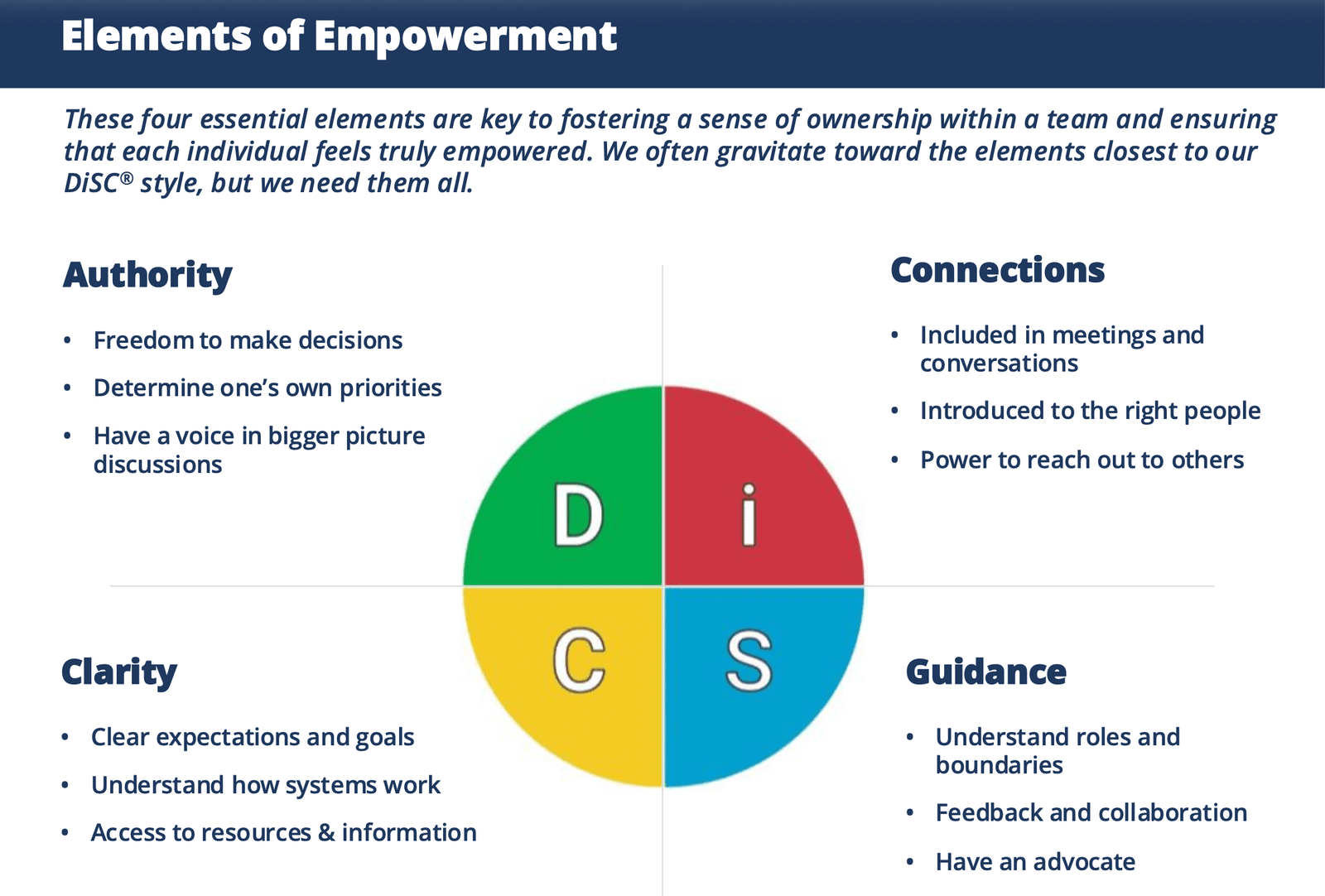
✔ Adapt each element to different DiSC styles
This is where the module shines. Managers learn how to flex their tone, pace, examples, and structure depending on whether they are speaking with a D, i, S, or C colleague.
How to Tailor Feedback to Each DiSC Style
Integrating this knowledge into your review preparation can significantly improve the quality of your conversations.
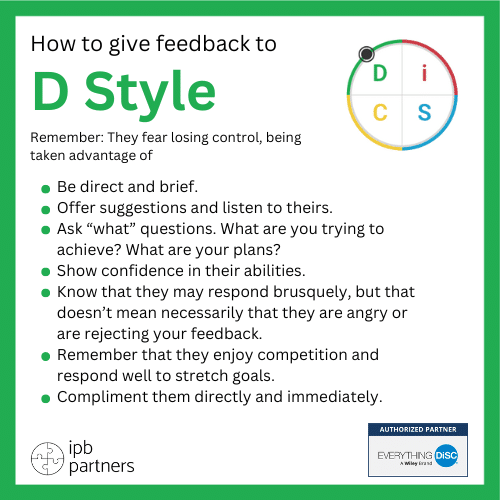 Giving Feedback to D-Style Employees
(Remember: They fear losing control or being taken advantage of.)
Key recommendations:
- Be direct, brief, and specific.
- Ask “what” questions to maintain their sense of agency.
- Show confidence in their abilities.
- Let them debate or challenge—they’re not being difficult; they’re processing.
- Offer stretch goals, not micromanagement.
A performance review for a D-style becomes high-impact when the manager links the feedback to results, autonomy, and forward momentum.
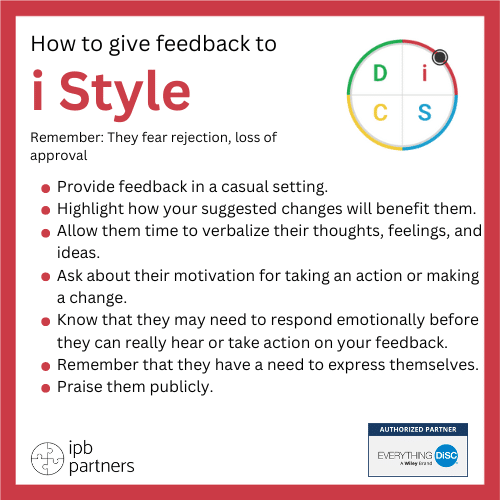 Giving Feedback to i-Style Employees
(Remember: They fear rejection and loss of approval.)
Keys to success:
- Create a warm, informal setting.
- Emphasize how changes will benefit relationships or team morale.
- Give them room to talk through feelings and ideas.
- Expect an emotional initial response, followed by enthusiasm once they understand the “why.”
- Praise publicly when appropriate.
Feedback resonates when the manager connects performance to collaboration, energy, and recognition.
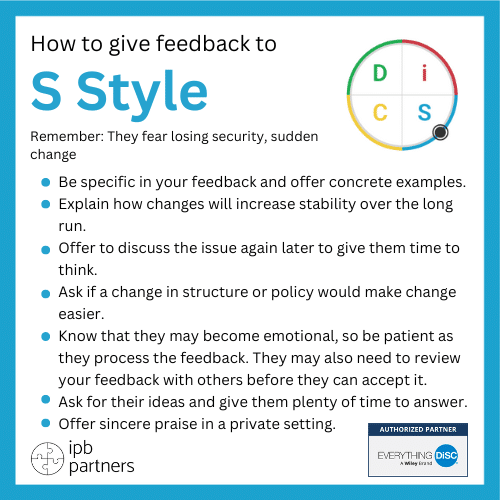 Giving Feedback to S-Style Employees
(Remember: They fear losing security or facing sudden change.)
- A calm, thoughtful conversation without time pressure.
- Concrete examples, delivered gently.
- Reassurance that change will be manageable and supported.
- Time to process before they commit to action.
- Sincere praise in private.
S-styles thrive when feedback strengthens trust and stability rather than introduces abrupt shifts.
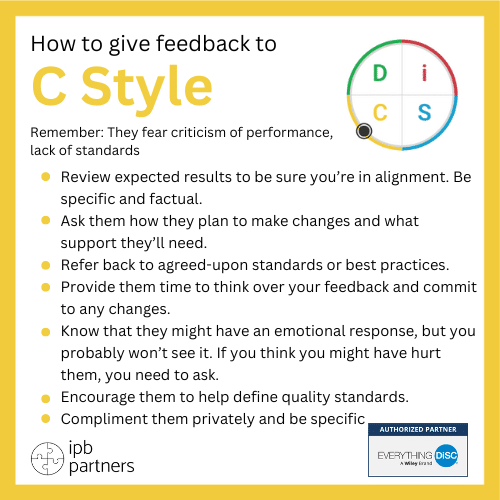 Giving Feedback to C-Style Employees
(Remember: They fear criticism of competence and unclear standards.)
- Stick to facts, evidence, and defined standards.
- Ask how they plan to adjust processes or structures.
- Provide written summaries or frameworks for clarity.
- Invite them to propose improvements—they love refining systems.
- Praise precision and expertise.
C-styles appreciate feedback that enhances accuracy, consistency, and mastery.
The Role of Psychological Needs in Performance Conversations
The Psychological Needs model reveals an often overlooked reality: Feedback is never just about behavior. It’s about protecting what the person values most.
For example:
- When a manager doesn’t give a D-style employee authority in setting goals, they may resist the feedback—not because the feedback is wrong, but because their autonomy is threatened.
- If an i-style receives feedback that feels cold or impersonal, they may disengage, interpreting it as rejection.
- An S-style confronted with sudden change may freeze or delay simply because stability is deeply important to them.
- A C-style receiving vague feedback may shut down until standards and expectations are clarified.
This is why DiSC-informed feedback feels respectful and motivating—because it acknowledges the human needs behind the behavior.
From Feedback to Empowerment: The Manager’s New Toolkit
DiSC Elements of Empowerment reinforces that effective development isn’t just about correcting performance—it’s about enabling ownership:
- Clarity reduces anxiety and misalignment.
- Authority increases motivation and trust.
- Connections ensure people feel supported.
- Guidance helps them avoid mistakes and grow intentionally.
When managers use DiSC to strengthen these elements, performance reviews become ongoing coaching conversations that build confidence, not fear.
Feedback Is a Skill, Not an Obligation
Most managers aren’t avoiding feedback because they don’t care—they’re avoiding it because it feels risky, unpredictable, or emotionally charged. But with the right framework, feedback becomes a leadership superpower.
Everything DiSC Worksmart’s Giving Constructive Feedback module gives managers:
- practical templates,
- personalized insights,
- style-specific strategies, and
- clear action steps
to lead honest, motivating, and high-quality performance reviews.
When leaders master these skills, something powerful happens: Teams feel seen. Expectations become clear. Accountability strengthens. Engagement grows.
And performance improves because people finally hear feedback in a way that helps them act on it.
You might also be interested in