
Organizations today rely on strong communication, collaboration, and leadership to succeed. Yet many workplace challenges, ie conflict between colleagues, misunderstandings between teams, or ineffective leadership, often come down to differences in behavioral style.
The DiSC personality assessment is one of the most widely used behavioral tools for helping people understand how they work, communicate, and interact with others. Used by organizations worldwide, DiSC provides a simple framework for recognizing behavioral differences and adapting to them more effectively.
In this guide, we explain:
- what the DiSC personality assessment is
- the four DiSC personality styles
- how organizations use DiSC for leadership and team development
- how DiSC improves communication and collaboration in the workplace

What is the DiSC Personality Assessment?
The DiSC personality assessment is a behavioral model that helps people understand how they tend to communicate, make decisions, and approach work.
The model categorizes behavioral tendencies into four primary styles:
- Dominance (D)
- Influence (i)
- Steadiness (S)
- Conscientiousness (C)
These styles do not measure intelligence or competence. Instead, they describe how people tend to behave and interact with others.
Understanding these patterns helps individuals adapt their communication, improve teamwork, and become more effective leaders.

Modern assessments such as Everything DiSC® (a Wiley brand) combine this simple model with validated questionnaires and practical workplace insights. Wiley has been researching and analyzing DiSC for over 40 years. You’ll always know it’s our DiSC from our signature lower-cased “i” in DiSC.


Dominance (D) Style
People with a Dominance style tend to focus on results, action, and problem solving.
Typical characteristics include:
- direct communication
- quick decision-making
- comfort with taking risks
- focus on achieving goals
D-style individuals often thrive in fast-paced environments and leadership roles where decisive action is needed.
However, they may sometimes be perceived as overly blunt or impatient if communication styles are not understood.
Influence (i) Style
Influence-style individuals tend to be enthusiastic, social, and persuasive.
Common traits include:
- strong communication skills
- optimism and energy
- enthusiasm for collaboration
- ability to motivate others
People with an i-style often excel in roles that involve networking, influencing others, or building relationships.
Their challenge can be maintaining focus on details or long-term planning.


Steadiness (S) Style
Steadiness-style individuals are typically patient, supportive, and dependable.
They often value:
- cooperation and teamwork
- stability and reliability
- listening and empathy
- long-term relationships
S-style individuals help create harmony within teams and often act as stabilizing forces during times of change.
However, they may avoid conflict or hesitate when rapid decisions are required.
Conscientiousness (C) Style
Conscientiousness-style individuals tend to emphasize accuracy, analysis, and quality.
Typical characteristics include:
- attention to detail
- strong analytical thinking
- careful decision-making
- preference for structure and clarity
C-style individuals are often valued for their precision and ability to analyze complex information.
Their challenge can be adapting quickly when situations require speed rather than perfect accuracy.

-
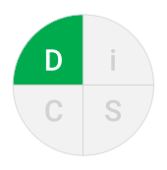
D style
People with D dimension tend to be confident and emphasize accomplishing bottom-line results.
Listen to a podcast about the D style:
-

i style
People with i dimension tend to be more open and place an emphasis on relationships and influencing or persuading others.
Listen to a podcast about the i style:
-
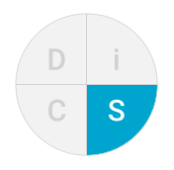
S style
People with S dimension tend to be dependable and place the emphasis on cooperation and sincerity.
Listen to a podcast about the S style:
-
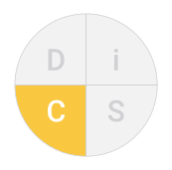
C style
People with C dimension tend to place the emphasis on quality, accuracy, expertise, and competency.
Listen to a podcast about the C style:


Get Valuable Insights on DiSC
Free 10-Day Email Course
Free 10-Day Email Course
Sign up to receive a free 10-day email series filled with practical tips, expert insights, and helpful guidance on understanding and applying the DiSC model.

Why Understanding DiSC Styles Matters in the Workplace
Behavioral differences are a natural part of any team.
Without a shared framework, these differences can easily lead to misunderstandings.
For example:
- a D-style leader may appear too direct to an S-style colleague
- an i-style team member may seem disorganized to a C-style colleague
- a C-style analyst may appear overly critical to an i-style teammate
DiSC provides a neutral language for discussing these differences, helping teams move from frustration to understanding.


How Organizations Use DiSC
Organizations use DiSC in many areas of leadership and team development.
Common applications include:
Leadership development
Leaders learn how their behavior affects others and how to adapt their communication for different team members.
Team development
Teams gain insight into each other’s working styles and improve collaboration.
Conflict resolution
Understanding behavioral differences helps teams address disagreements more constructively.
Onboarding
New employees can quickly understand team dynamics and communication preferences.
Organizational culture
A shared behavioral framework encourages openness, trust, and psychological safety.
Everything DiSC: A Modern Behavioral Platform
Modern DiSC solutions such as Everything DiSC® go beyond a simple personality test.
The platform provides:
- personalized assessment reports
- interactive learning tools
- practical strategies for workplace communication
- insights for leadership and team development
Tools like the Catalyst learning platform allow teams to explore behavioral differences and apply insights directly to everyday work situations.
This ongoing application helps ensure that DiSC becomes part of the organization’s culture rather than a one-time workshop.


DiSC and Leadership Development
Leadership is not only about strategy and decision-making. It also involves understanding people.
DiSC helps leaders:
- recognize how their communication style affects others
- adapt their approach to different team members
- create more inclusive team environments
- respond more effectively to conflict or resistance
Many organizations integrate DiSC into leadership programs to support more adaptive and emotionally intelligent leadership.
DiSC and Team Collaboration
Teams often struggle not because of lack of skill, but because of differences in working style.
DiSC helps teams:
- understand each other’s preferences
- communicate more clearly
- build trust
- manage disagreements productively
When teams develop this awareness, collaboration becomes more efficient and less stressful.

Behavioral differences are a normal and valuable part of any workplace.
The DiSC model helps individuals and teams understand these differences and use them as a strength rather than a source of conflict.
By providing a clear and practical framework for communication, leadership, and teamwork, the DiSC assessment has become one of the most widely used behavioral tools in organizations worldwide.


Most Commonly Asked Questions About DiSC
In the Everything DiSC® model published by Wiley, there are no “rare” or “common” styles. The assessment is designed so that the population is distributed relatively evenly across the four main styles — Dominance (D), Influence (i), Steadiness (S), and Conscientiousness (C).
While the model describes four primary styles, most people are actually a blend of styles. Because of these combinations, the Everything DiSC framework identifies 12 distinct style patterns, reflecting the different ways people tend to express their behavior.
DiSC is widely used by:
- HR and L&D Leaders
To support leadership development, team training, and culture initiatives.
- Business Consultants and Coaches
To facilitate leadership programs, team workshops, and organizational development work.
- Managers and Leadership Teams
To strengthen communication, decision-making, and collaboration.
Organizations use DiSC in many areas of leadership and team development.
Common applications include:
- Leadership development
Leaders learn how their behavior affects others and how to adapt their communication for different team members.
- Team development
Teams gain insight into each other’s working styles and improve collaboration.
- Conflict resolution
Understanding behavioral differences helps teams address disagreements more constructively.
- Onboarding
New employees can quickly understand team dynamics and communication preferences.
- Organizational culture
A shared behavioral framework encourages openness, trust, and psychological safety.
DiSC personality model assessments are designed using rigorous psychometric research to ensure reliability and validity. The Everything DiSC assessments developed by Wiley are built on adaptive testing technology, meaning each question adjusts based on previous responses to create a more precise profile.
Independent testing shows that Everything DiSC assessments meet established standards for workplace assessments in areas such as:
-
Reliability – people tend to receive consistent results over time
-
Validity – the assessment accurately measures behavioral tendencies related to workplace interactions
-
Normative comparison – results are compared against large global datasets
Rather than labeling people or predicting ability, DiSC focuses on observable behavioral preferences, which makes the results highly practical for improving communication, teamwork, and leadership effectiveness.
Yes. Many organizations train HR and learning & development teams to use DiSC internally.
After DiSC certification, internal practitioners can:
- Deliver DiSC workshops to leaders and teams
- Support onboarding and team development initiatives
- Facilitate conversations around communication and collaboration
- Use the Everything DiSC Catalyst platform to provide ongoing learning and team insights
- Get their own admin account and access to discounted DiSC profile pricing
Many organizations adopt DiSC as a common language for behavior and collaboration, enabling HR teams to scale leadership and team development initiatives across the organization while maintaining a consistent development framework.
DiSC Certification allows you to:
- deliver professional DiSC workshops
- build credibility as a facilitator
- access all the official Everything DiSC solutions
- support leadership and team development initiatives
- expand your consulting or coaching services
- get DiSC profiles with discounted pricing
- manage the profiling and admin self-sufficiently
The DiSC model is based on the work of William Moulton Marston, a physiological psychologist who earned his Ph.D. from Harvard University.
In his 1928 book Emotions of Normal People, Marston described how observable emotional responses influence human behavior. His research focused on how people respond to their environment and interact with others, which later inspired the development of behavioral assessment tools based on the DiSC framework.
Modern DiSC assessments build on Marston’s ideas and combine them with decades of additional research to create practical tools for workplace communication, leadership development, and team collaboration.
DiSC profiles are available in languages such as Chinese, Danish, Dutch, Estonian, Finnish, French, German, Italian, Japanese, Lithuanian, Norwegian, Polish, Portuguese, Russian, Spanish, Swedish, and Turkish.
Everything DiSC has not been validated as a hiring tool. There is no direct correlation between DiSC styles and job success or satisfaction.
DiSC focuses on personality traits rather than the skills and abilities required for a specific job.
However, some jobs do have a disproportionate number of people with similar styles. This is only a modest trend and may only indicate that more people choose or are hired for that profession.
For example, you might see several iD styles in your sales department or C styles in IT and finance departments. That might mean more of those styles go into those roles or that recruiters have a bias toward that style for these roles.
Still, Everything DiSC is used by many organizations to build self-awareness and to help understand the style preferences and ideal work environments of new employees, aiding in their successful integration.
Your DiSC profile can evolve over time due to factors such as life experiences, education, and maturity.
Changes in your DiSC assessment results might be more noticeable over longer periods. While major shifts in style are unlikely, smaller changes can occur, especially after significant life events or when engaging in behaviors characteristic of different styles frequently.
At IPB Partners, we recommend re-taking the DiSC assessment every two years to ensure it captures your current style.

IPB Partners - Authorized DiSC® Partner
Woldemar Mayer building
Paldiski mnt 29, corpus B, 6th floor
Tallinn, Estonia 10612
+372 5257939
hello@ipbpartners.eu
Partnerships


Everything DiSC and The Five Behaviors are registered trademarks of John Wiley & Sons, Inc., or its affiliated companies.