
The complete guide to DiSC personality styles
The DiSC model explained: the four styles, how each one shows at work and under pressure, the 12 blended styles, and how organisations use DiSC for leadership and teamwork.
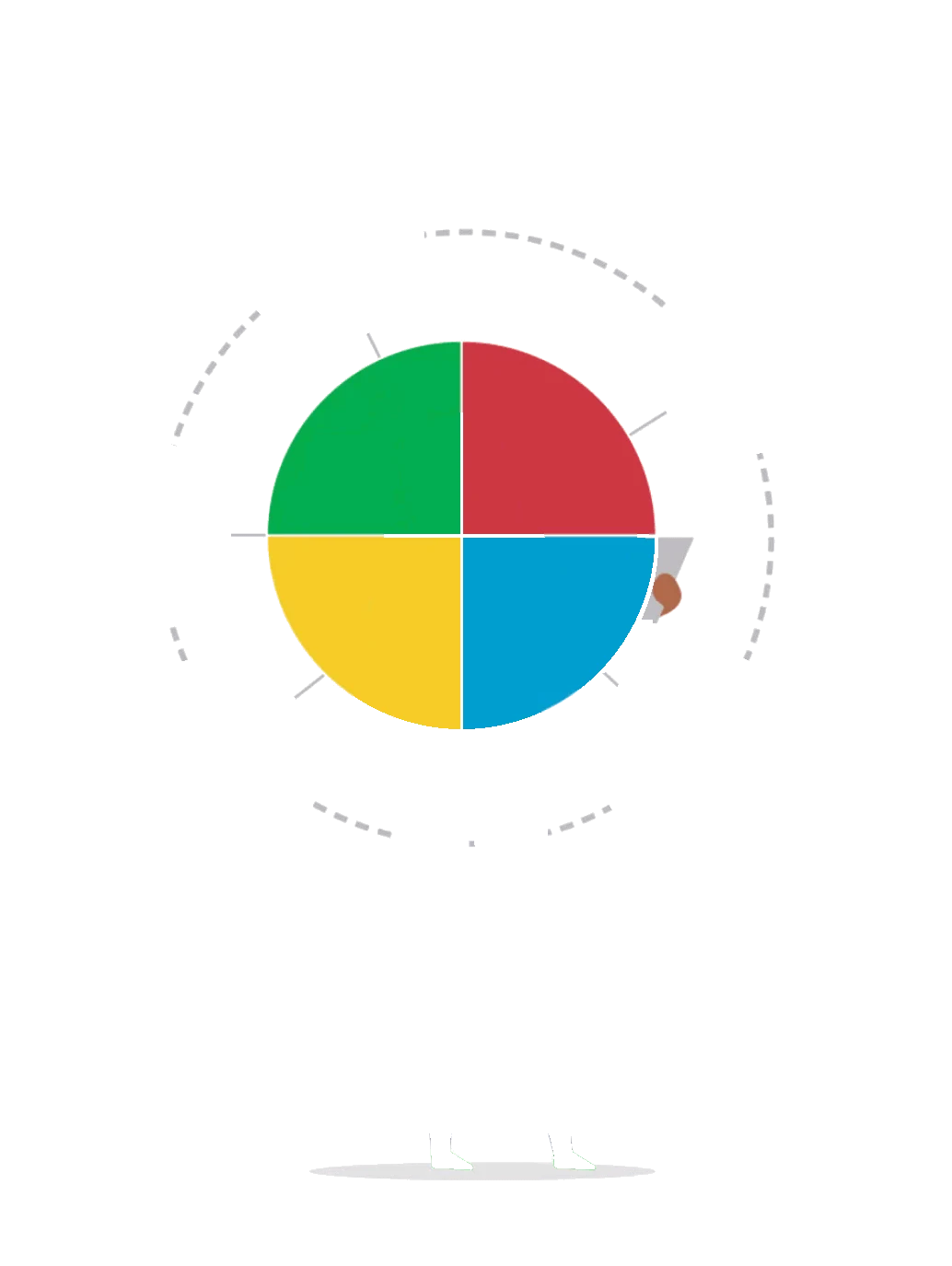






Most friction at work comes from differences in behavioural style, not from a lack of skill: a colleague who decides too fast, another who needs more detail, a third who avoids the difficult conversation. DiSC is one of the most widely used models for making those differences visible, and easier to work with. This guide explains the model, the four styles and how organisations use DiSC in leadership and team development.
What is the DiSC assessment?
The DiSC assessment is a behavioural questionnaire that shows how a person tends to communicate, make decisions and approach work. It places people on a circle with four basic styles: Dominance (D), Influence (i), Steadiness (S) and Conscientiousness (C).
DiSC does not measure intelligence, values or competence. It describes behaviour, which is why people can use it straight away: once you know someone’s style, you know what they need from you.
Modern assessments such as Everything DiSC®, published by Wiley, combine the model with an adaptive questionnaire and personalised reports of about 20 pages. You can recognise Everything DiSC® by the lower-case “i”.
The four DiSC styles
Everyone uses all four styles, but most people lean towards one or two. Here is what each style tends to bring to a team, how it shows under pressure, and how to work with it.

Dominance
Direct, decisive and focused on results.
At workMoves fast, speaks plainly and likes a challenge. Wants the bottom line first.
Under pressureCan come across as blunt or impatient, and push past other people.
Working with themBe brief and specific. Lead with the result, give them options and control.
Podcast: the D style, 57 min

Influence
Outgoing, enthusiastic and focused on people.
At workBrings energy, builds relationships and gets others on board with an idea.
Under pressureCan lose track of details, overpromise or talk ideas through for too long.
Working with themBe friendly and open. Give them room to talk, recognition and a bit of fun.
Podcast: the i style, 55 min

Steadiness
Calm, patient and dependable.
At workListens, supports the team and keeps things running steadily.
Under pressureCan avoid conflict, say yes too easily and resist sudden change.
Working with themBe patient and sincere. Explain changes early and show how people are affected.
Podcast: the S style, 48 min

Conscientiousness
Analytical, precise and focused on quality.
At workChecks the facts, thinks things through and cares about getting it right.
Under pressureCan seem distant or critical, and hold back until everything is certain.
Working with themBe accurate and logical. Give them data, time to think and clear expectations.
Podcast: the C style, 60 min
We are all a blend
No style is better or worse than another, and most people shift between styles depending on the situation. The assessment shows the style you rely on most naturally: your behavioural comfort zone.
Everything DiSC® places each person as a dot on the circle, which gives 12 blended styles such as Di, iS, SC or CD. The closer the dot is to the edge, the more strongly that style shows.
“The meeting of two personalities is like the contact of two chemical substances:
if there is any reaction, both are transformed.”
C.G. Jung, Swiss psychiatrist, Modern Man in Search of a Soul, 1933
Why DiSC styles matter at work
Without a shared framework, style differences easily turn into judgements. For example:
- a D leader may seem too direct to an S colleague
- an i team member may seem disorganised to a C colleague
- a C analyst may seem overly critical to an i teammate
DiSC gives a neutral language for these differences. “He is difficult” becomes “he needs the data first”, and that is something a team can work with.
How organisations use DiSC
- Leadership development: leaders see how their behaviour affects others and adapt to each person.
- Team development: teams understand each other’s working styles and collaborate better.
- Conflict: disagreements become easier to discuss when the pattern behind them is visible.
- Onboarding: new people understand team dynamics and communication preferences faster.
- Culture: a shared language supports openness, trust and psychological safety.
- Sales and service: people read customers’ styles and adapt how they communicate.
Platforms such as Everything DiSC® on Catalyst™ let people compare styles with any colleague and come back to DiSC before a meeting or a difficult conversation, so it becomes part of daily work rather than a one-off workshop.
DiSC and leadership
Leadership is also about understanding people. DiSC helps leaders:
- recognise how their communication style affects others
- adapt their approach to each person on the team
- build more inclusive teams
- respond better to conflict and resistance
Everything DiSC® Management focuses on managing people day to day, and Work of Leaders on setting a vision, aligning people and driving execution.
DiSC and teamwork
Teams often struggle with differences in working style more than with a lack of skill. DiSC helps teams understand each other’s preferences, communicate more clearly, build trust and handle disagreements productively. For teams that want to go further, The Five Behaviors® builds on DiSC with trust, conflict, commitment, accountability and results.
Is DiSC a personality test?
DiSC is often called a personality test, but it is more accurate to call it a behavioural assessment. It focuses on observable behaviour at work rather than deep personality traits. That makes it practical for development, and not suitable for selection: for hiring decisions, use an assessment designed for it, such as ProfileXT®.
How to start using DiSC
Organisations that get the most out of DiSC usually:
- start with a team or a leadership group, not a one-off workshop
- build DiSC into leadership and onboarding programmes
- certify one or more internal facilitators
- use the same model consistently across teams
Frequently asked questions
What is the rarest or most common DiSC style?
In Everything DiSC® there are no rare or common styles. The assessment is designed so that people are spread fairly evenly across the four styles. Because most people are a blend, the model describes 12 style patterns.
Who is DiSC for?
HR and L&D teams use it for leadership development, team training and culture work. Consultants and coaches use it in team workshops and leadership programmes. Managers use it to communicate, decide and collaborate better.
How accurate is DiSC?
Everything DiSC® uses adaptive testing: each question adjusts to previous answers to create a more precise profile. Its scales show test-retest reliability of .85 to .88, and Everything DiSC® Workplace is certified by DNV to the EFPA test-quality standard.
Can organisations use DiSC internally?
Yes. After DiSC® certification, HR and L&D people can run DiSC sessions, support onboarding and team development, use the Catalyst™ platform and get partner pricing. With an optional EPIC admin account they can also send assessments themselves.
Who created the DiSC model?
The model is based on the work of psychologist William Moulton Marston, who described four patterns of behaviour in his 1928 book Emotions of Normal People. John Geier built the first DiSC assessment in the 1970s, and Wiley publishes Everything DiSC® today.
Is DiSC available in my language?
Everything DiSC® Workplace reports are available in 20+ languages. If you need another profile in a specific language, ask us.
Can DiSC be used for hiring?
Everything DiSC® is not validated for hiring, and there is no direct link between DiSC style and job success. Some roles attract more people of one style, but that is a modest trend. For selection, use ProfileXT®.
Can my DiSC profile change over time?
Your basic style is fairly stable, but it can shift with experience, education and life events. There is usually no need to retake the assessment within two years.
Get practical insights on DiSC
Free 10-day DiSC email course
One short lesson a day: the model, the four styles and how to use them with your team. Unsubscribe any time.