Interpretation of DiSC Results – Amira (i Style)
At its core, the DiSC® model is designed to be simple to understand and easy to remember. The respondent needs to be able to leave a DiSC experience with clear, simple principles that can be understood and applied in the real world. However, every model and assessment tool is only a simplification of real life. Real life and real people are always much more colorful and diverse, therefore, interpreting anyone’s DiSC results is always a process best done together with the learner.
That is why we now present the third of our 4 hypothetical case studies designed to:
- illustrate the relationship between profile results and real-life behavior
- model the appropriate interpretation of profile results
Note that these cases include specific characteristics that should not necessarily be generalized to every person sharing a particular style. These are simply one possible manifestation of that DiSC style.
The case study presented here includes the individual’s Everything DiSC map, but also an umbrella graph that shows the person’s scores on the eight DiSC scales and can give a practitioner additional insight into the respondent’s DiSC style. These umbrella graphs are not included in the respondent’s Everything DiSC profile but are available in the Everything DiSC Supplement for Facilitators.
Amira: i Style
Amira is a 28-year-old nurse practitioner. She’s just started her first job out of school at a large metropolitan hospital and has already made strong connections with most of the people inside her department. Her coworkers find her to be cheerful, warm, and thorough. Her favorite parts of the job are meeting new people, providing support for them, and giving them the medical information that can help relieve their anxiety. Her least favorite part of the job is dealing with a small subset of her coworkers who are cynical, condescending, and sometimes sloppy in their work with patients. Their behavior is deeply unsettling for her, but she does her best to gloss over her objections and remain positive.
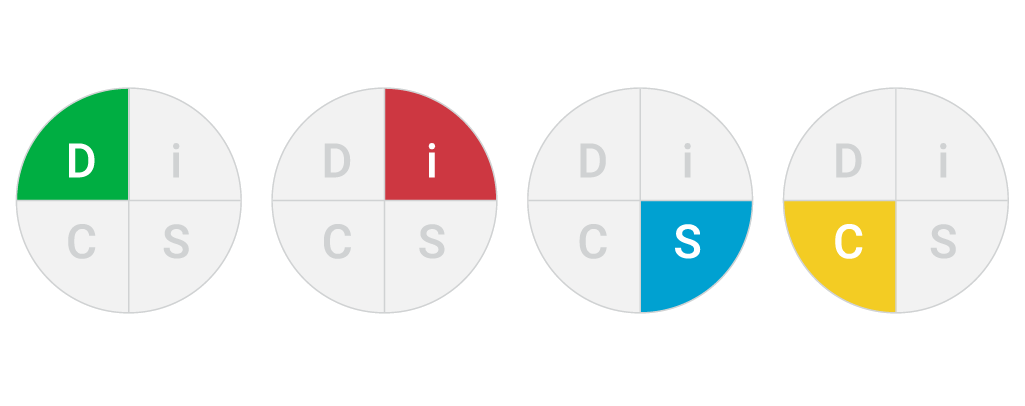
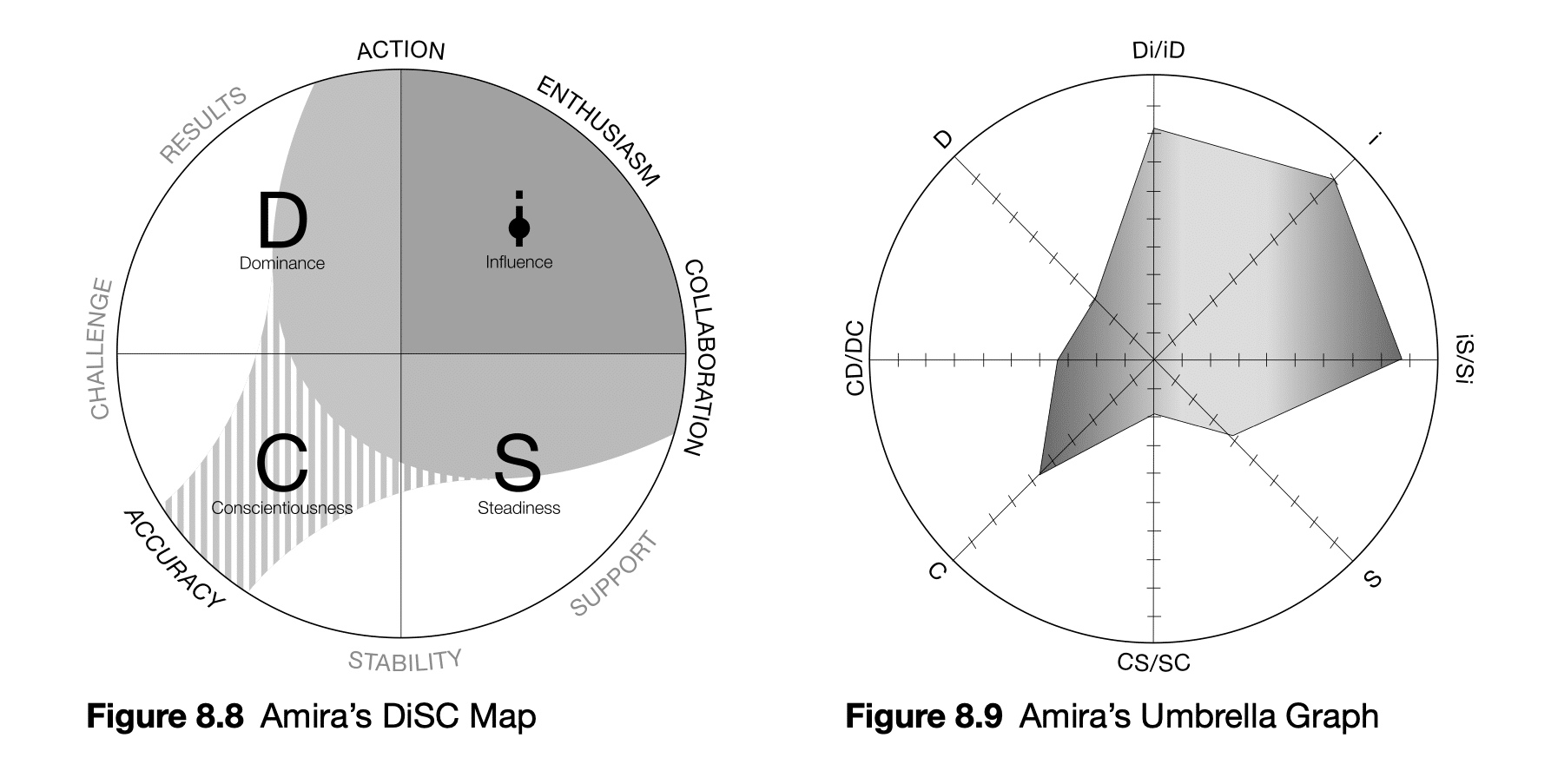
 Amira’s results suggest that she has an i style, with an additional priority on accuracy (see Figure 8.8). In most instances, extra priorities are adjacent to the solid shading within the Everything DiSC map. As such, Amira’s profile is uncommon, and the conflicting priorities are conceptually more difficult to reconcile compared to a more traditional profile. One theme common among people with this pattern of results is a desire to present a polished appearance. This manifests itself on both a task and interpersonal level. With regard to her work, Amira is attentive to deadlines and ensures that her output is beyond reproach. With regard to relationships, she wants to come across as poised and affable.
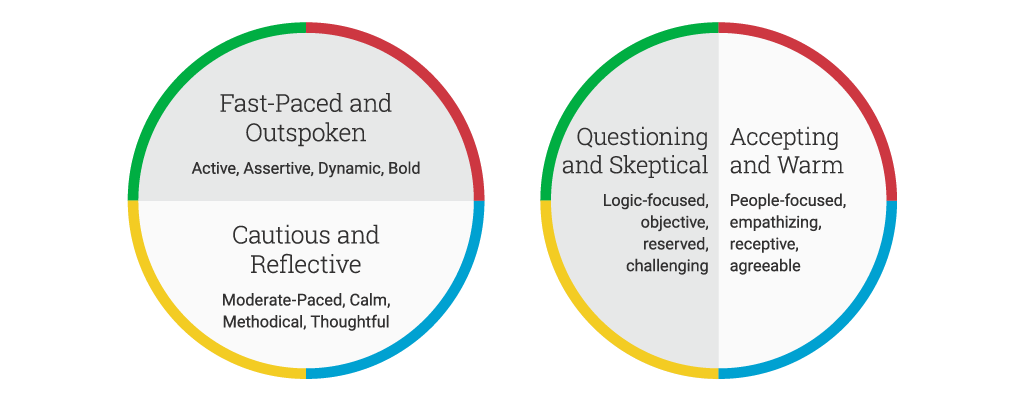
Amira has a moderate inclination toward her style. Although she has a clear preference for the i style, the more pronounced characteristics often associated with the i style (e.g., striking up conversations with strangers, being the life of the party) are less likely to be true for her. For instance, although Amira is sociable and has quickly formed relationships with many in her department, she has not necessarily branched out of her department to befriend people with whom she has less frequent contact. The umbrella graph indicates a moderately high score on the C scale (see Figure 8.9), but because she received an extra priority in Accuracy, it is reasonable to assume that she scored high on the Accuracy priority scale in the Workplace assessment. The umbrella graph also shows relatively low scores on the D and CD DiSC scales, which may explain why she prefers to avoid a potentially contentious confrontation with her coworkers, despite being deeply troubled by their behaviors.
What else do you read out from her DiSC result? What would you like to ask Amira if you would be her coach/trainer/manager?
Reference: Everything DiSC Manual (Scullard, Baum 2015)
You might also be interested in




 The assessment indicates that Rafael has a CS style, with a strong inclination (see Figure 8.6). Further, his umbrella graph indicates that his pattern of DiSC scale scores is consistent with a strong CS style (see Figure 8.7). That is, he received very high scores on the C, CS, and S scales, moderate scores on the iS and CD scales, and very low scores on the D, Di, and i scales. This profile is associated with someone who is modest, self-controlled, and systematic. Like others with this style, Rafael places a particularly strong priority on stability and accuracy. He takes steps to create a predictable environment for himself and may be overly wedded to systems and routines that provide comfort for him. He has a strong task orientation but is not challenging or argumentative with his colleagues when he disagrees with them. This is largely reflected by his middling placement on the horizontal dimension of the Everything DiSC map (skeptical to accepting), but also by his lower placement on the vertical pace dimension (moderate-paced to fast-paced).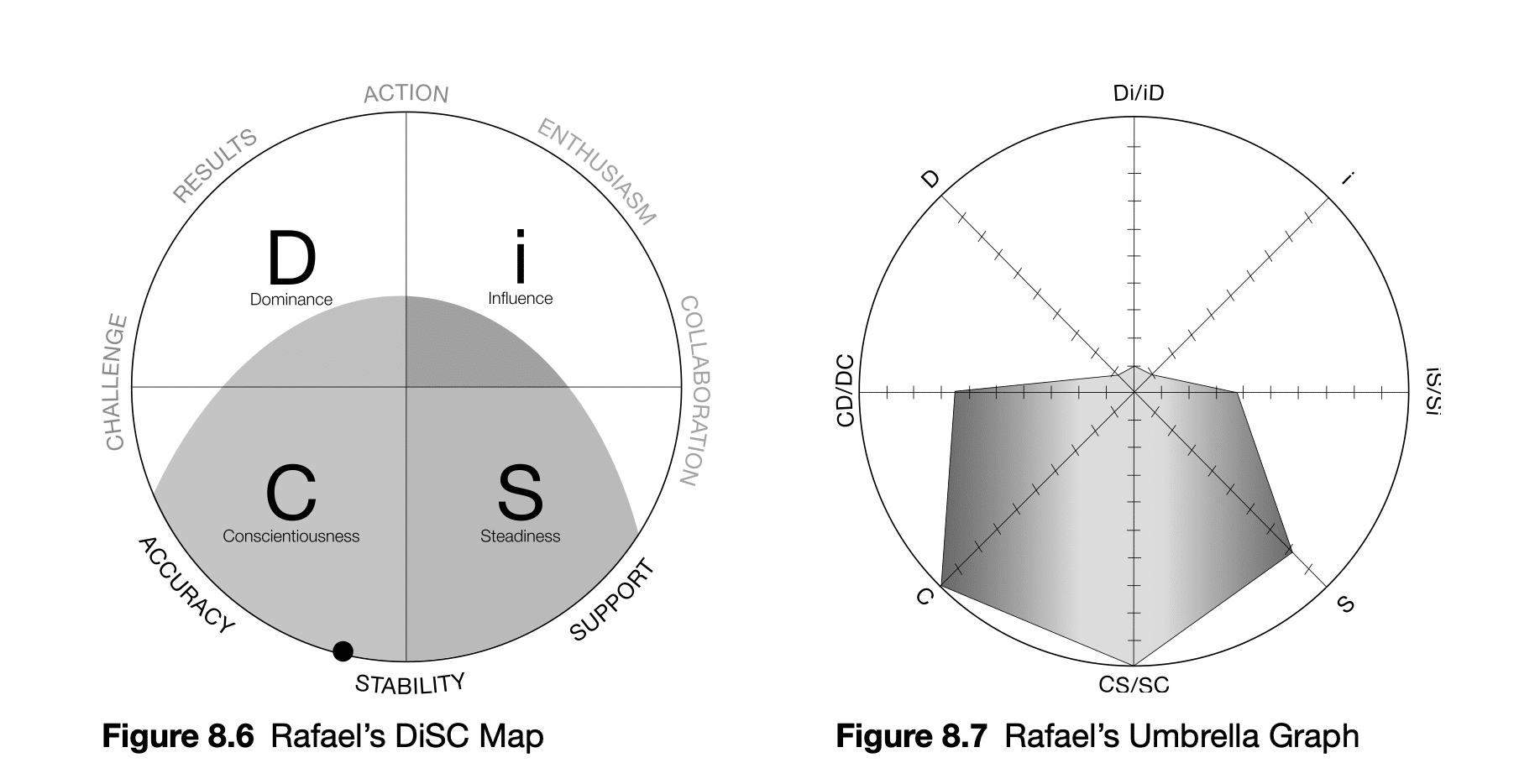


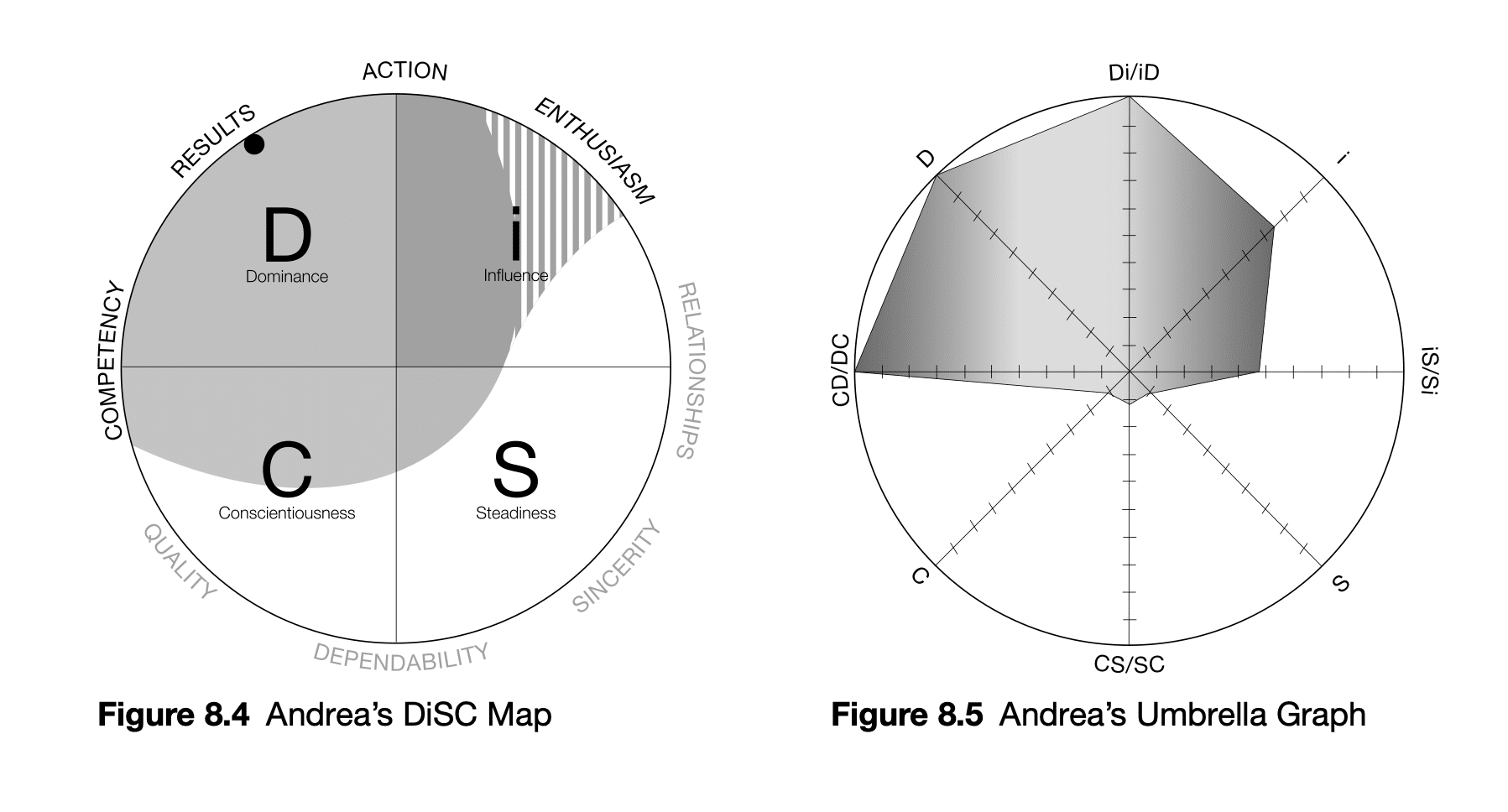
 The assessment suggests that Andrea has a D style with an extra priority in Enthusiasm and a strong inclination toward her style (see Figure 8.4). Further, the umbrella graph indicates that her pattern of scores on the DiSC scales is as expected for someone with her dot placement and shading (see Figure 8.5). That is, she scored high on the D, CD, Di, and i scales and low on the S, CS, and C scales. This profile is associated with people who are bold, forceful, and enterprising. Her level of drive is typical for people with this style and, given her current level of immaturity, much of her self-worth may be wrapped up in her ability to achieve results. At her current stage of development, she has an exaggerated sense of her own rights, particularly relative to the rights of others. Likewise, she often only shows interest in the emotional experience of other people to the degree that it will help her achieve her goals.