It’s no secret that many people love working from home. Over this past year, we were all tossed into a grand experiment in which many of us learned how to work remotely. Remote work comes with many advantages: suddenly, you are free to roll out of bed in the morning and join a meeting, pick up your child in the middle of the afternoon, or work out immediately after the workday ends.
However, many of these perceived benefits to the employee come at an almost imperceptible cost: we feel less connected to our workplace and coworkers. And this is not surprising! When we trade these natural times to connect for virtual interaction, the opportunities for colleagues to connect on a personal level—let alone express empathy—are few and far between. We think a decline in workplace empathy could tell part of the story of why people are feeling disconnected right now.
A 2020 State of Workplace Empathy report by Businessolver found that the number of employees who feel their workplace is empathetic has declined from 78% to 68%, down 10% from previous years. Furthermore, the percentage of HR professionals who felt their organization is empathetic declined even more dramatically from 95% to 77%.
At its core, empathy is about understanding someone else’s point of view, and it is essential for creating cooperative and productive relationships in the workplace. Research also shows that developing an empathetic workforce contributes to increased motivation, productivity, and lower turnover. If empathy is essential to workplace success, why might it be on the decline? We hypothesize that three common misconceptions can prevent leaders from prioritizing this important business imperative:
Building an empathetic workforce takes more time than it’s worth.
Expressing empathy requires a certain level of vulnerability and being vulnerable in the workplace can be seen as a weakness.
It’s tough to know how people are feeling when you aren’t face-to-face, so practicing empathy isn’t essential in a remote/hybrid workplace.
However, you can overcome all three of these misconceptions with strategic investments in your workplace culture. Let’s take a look at each misconception and reframe our thinking.
Misconception #1: Building an empathic workforce takes more time than it’s worth
One of the keys to creating strong and healthy workplace morale is good communication. You’ve likely had meetings where people talk over one another, so only the loudest ideas in the room gain traction. Conversely, you may have seen the opposite, where no one talks, and the collective silence is taken as a tacit agreement to the prevailing idea. This is where a skill like empathy really matters, it allows people to read situations and respond accordingly, which fosters human connection, allowing people to work better together.
Empathy is considered a soft skill, also known as a social and emotional skill. These skills allow us to improve our relationships with our co-workers, develop more productive teams, and resolve conflicts when necessary. However, soft skills are hard work and require a time investment to be effective. Many of us don’t always think we have the time to invest in soft skills development because they can’t be directly tied to business objectives. But, research suggests that investing in employee well-being and soft skill development increases retention, engagement, productivity, and overall job satisfaction. With a time investment on the front end, your team will learn how to stretch beyond their natural tendencies to express empathy in every situation, ultimately getting to great ideas more quickly.
Misconception #2: Expressing empathy requires a certain level of vulnerability and being vulnerable in the workplace can be seen as a weakness
Empathy in the workplace requires you to be, to a certain extent, a little bit vulnerable. And you might be thinking, “be vulnerable at work? No thank you!” But being vulnerable at work is important because it helps to create a culture of trust. And if you’re a manager, creating a culture that allows space for vulnerability is critical. For instance, would you rather have your employees ask for help when they are having problems because they trust you will respond with empathy, or would you prefer to become aware of issues when deadlines are missed because your team does not feel comfortable opening up to you when concerns arise?
According to Harvard Business Review, “managers who display high levels of empathy have three times the impact on their employee’s performance than those who display low levels of empathy.” When leaders have high levels of emotional intelligence, they create an atmosphere where their employees feel supported and thus more engaged.
Misconception #3: It’s tough to know how people are feeling when you aren’t face-to-face, so practicing empathy isn’t essential in a remote/hybrid workplace
Your working environment has likely shifted due to the universal challenges of the past year. Virtual meetings and communications have become a part of your new normal. As a result, you are often not in physical proximity with your coworkers, making it easy to forget that you are working with people who also have their own communication styles, behaviors, and natural tendencies. Some coworkers thrive while working from home, while others miss all the daily interactions that come from working in an office. According to Virtual Vocations, there are four concrete ways to show empathy with a remote and hybrid team:
Incorporate unstructured face time into virtual meetings.
Allow each person time and space to contribute.
Listen and encourage different perspectives.
Always remain open to communication.
By implementing these concepts, empathy can increase in the remote or hybrid workplace, and what follows is a more inclusive, harmonious, and efficient remote team. That’s a result worth the effort.
Empathy is an investment in building an environment that people want to be a part of—the kind of place that inspires people to do what they do even better. The good news? You can reverse the decline in workplace empathy by providing your entire team with the opportunity to learn the social and emotional skills that are critical for creating lasting change through positive and productive day-to-day interactions.
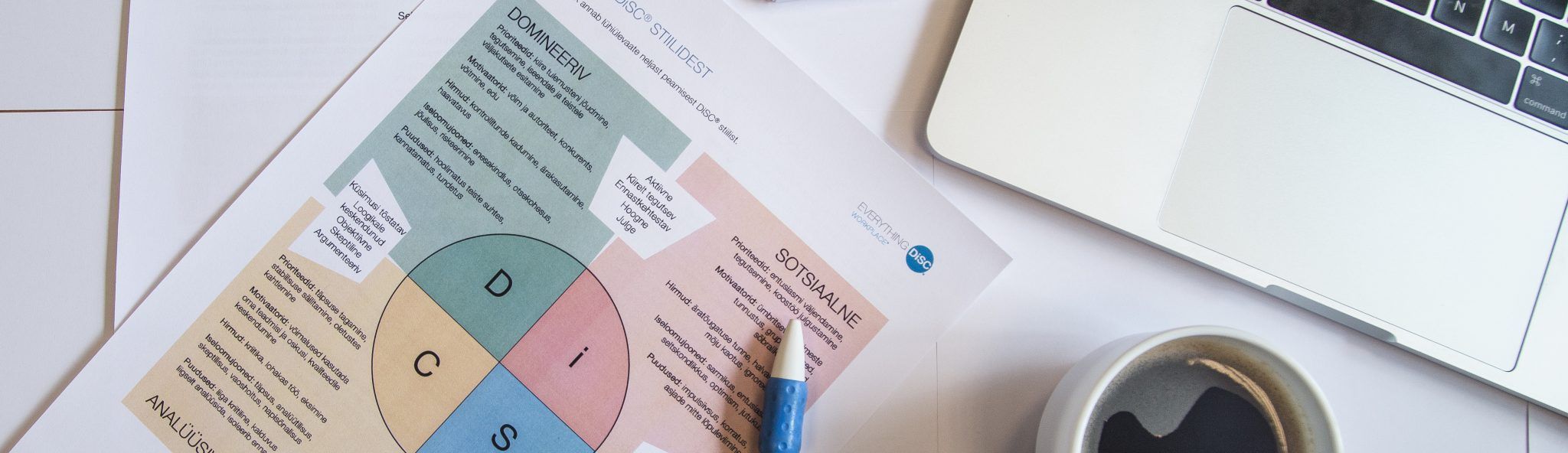
Because empathy is a skill that doesn’t come naturally to everyone, and it takes effort to learn and develop, it’s imperative to provide your people with the right tools for self-discovery. That’s where Everything DiSC® can help. Everything DiSC utilizes the DiSC model to describe four basic behavior styles: dominance, influence, steadiness, and conscientiousness. While identifying your DiSC style is a step towards richer personal growth and understanding, it is only one piece of the relationship puzzle. Taking that knowledge, a step further and putting it into practice leads to tangible transformation.
This blog content belongs to Everything DiSC, a Wiley brand.
Some DISC tools claim to measure “natural behavior” vs “adapted behavior”. These are typically older DISC tools similar to our DiSC Classic® profiles. The questionnaire in these types of assessments consists of groups of four words where you have to choose a word that is most like you and a word that is least like you. As a result, you see two graphs – one with the words you picked that are most like you and one with the words that are least like you. The sum of these two graphs shows your DISC style.
Some DISC tool providers claim that the graph with your “most” choices shows “adapted behavior” (because it is a very conscious choice), while the graph with your “least” choices shows your “natural behavior” because it is a less conscious choice.
“Our researchers have not been able to find any scientific evidence that supports this interpretation, and when reviewing research reports from assessment providers who make this claim, we cannot find any research that documents that one graph shows natural behavior and the other adapted behavior.”
While you can have a lot of good conversations around natural and adapted behavior, we don’t see any evidence that DISC actually measures this.
Most other DISC providers claim that the first and second graphs measure adaptive and natural behaviour. This is a myth. The British Psychological Society, in the early 90s, performed its own validation study on the 24-item DISC questionnaire and concluded that Graph I and II were measuring nothing more than different views of self-perception.Current DISC providers continuing to make this assertion are working with outdated and unsupported facts.
When a person is responding to the basic 24-item questionnaire they are simply focusing on their self-perception – a singular focus. It is implausible to then believe that they could get two different results from that single focus such as adaptive and natural behaviour.
Adjusting Results for Social Bias
It is standard practice in the world of psychometric testing to recognize that when a person is assessing themselves, they have a tendency towards social bias – to choose items that are more socially desirable as being like them, such as “friendly”, and to not choose socially undesirable attributes such as “aggressive”.
The original 24-item questionnaire developed by John Cleaver offered attributes that describe the different behaviours that DISC measures and asked which of these attributes are most like you, and which are least like you. Then the least scores were subtracted from the most to determine the difference. This formed three graphs – most like, least like, and the difference. The reason for this type of questionnaire design was to reduce the impact of people tending to answer with responses that were more socially desirable.
This showed up in the psychometric analysis in that Graph 3, the difference scores, were always more internally reliable than Graphs 1 or 2.
For some reason, many providers of DISC profiles do not provide the results of Graph 3 – the only graph that can show the person’s overall self-perception with the removal of the social bias.
There is a myth that “you don’t need graph III, only using Graph I and II is more accurate”.
First, Wiley does not use Graph I, II and III anymore in their new generation tools (they were only used in DiSC Classic), since the new generation Everything DiSC instruments use a “circumplex”, which is a circular map, with 8 priorities around it. This “new” model goes all the way back to the origins of DiSC where it used to be drawn on a circle. So why the fuss about Graph I, II and III? Because some people claim Graph III is more accurate while others claim you should not consider Graph III, since using Graph I and II, “showing natural and adapted behavior” as some claim, is more effective.
Historically, Graph III is the result of adding up the scores of Graph I and Graph II.
Why was that done? Because the instrument (the 24 question forced-choice) was unprecise, and the research report written in 1996 proves that. By upgrading the questions and adding 4 new questions, Wiley strongly improved the accuracy of the instrument (called Personal Profile System 2800, and later on DiSC Classic II), which has been the DiSC profile of choice for decades.
In the early days of DISC, Walter Clarke and John Cleaver used the “vector analysis tool”, which consisted in a set of cards that would describe a person’s behavior, “as seen by herself and as seen by others”. William Moulton Marston also mentioned “natural and adapted behavior” in his writing. However, since John Cleaver designed the first 24 question assessment, there have been no specific questions measuring “adapted or natural” behavior. This was established by Wiley when they lead extensive research and by the British Society of Psychology around 1994. This does not mean that people do not adopt “natural” or “adapted” behavior, it just means that the 24 and subsequent DISC assessment questionnaires are not designed to measure that specifically.
There are many significant differences between the Everything DiSC® assessment and other DISC tools available in the marketplace, including our use of the little ‘i’ to differentiate our bestselling assessments from the others.
But what sets Everything DiSC apart as the most valid and reliable tool on the market?
The Assessment Questionnaire
The first DISC profile developed was a 24-item questionnaire developed by John Cleaver in the 1950s and most of the other DISC profiles available today still use a version of that original 24-item forced-choice questionnaire.
The Everything DiSC questionnaire that sets our profile apart is our use of a five-point Likert scale and our use of adaptive testing technology. There is no forced choice – respondents respond to all items. When the respondent answers inconsistently on any scale, the program asks additional questions to get a more accurate plot of their position on that scale.
This methodology increases the accuracy of the Everything DiSC assessment significantly over the 24 item version. This technology behind Everything DiSC profile is light years ahead of the technology behind other DISC profiles in the marketplace.
Four Scales versus Eight
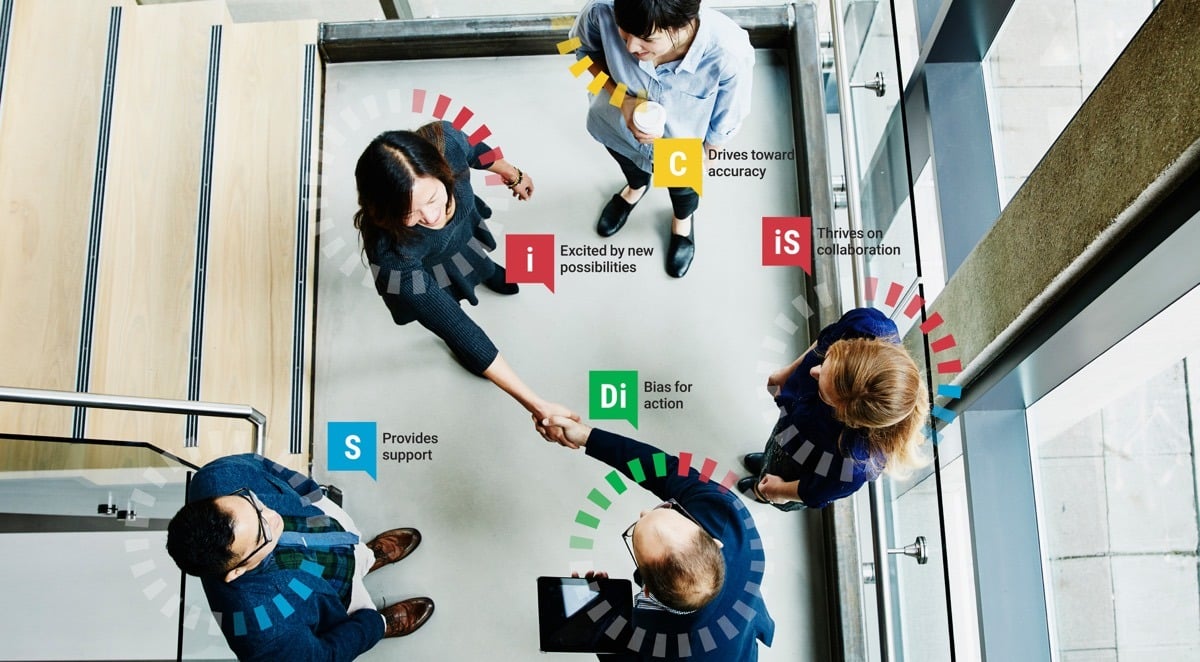
Everything DiSC is the only DISC profile that measures more than the basic four scales of D, I, S and C. What our research has found is that the combination scales, Di, iS, SC and CD are not an addition of the two styles they represent – they are an integration of the two dimensions.
For example, the Di style has strengths that are unique to the combination that are not shared by the D or i styles independently.
Research and Quality Standards
Everything DiSC is published by John Wiley & Sons, Wiley is a 208-year-old multinational publishing company with a strong reputation in the academic and professional world.
You probably had several Wiley-published textbooks during your university days. Wiley does not publish anything that has not met the most rigorous standards of validity and reliability.
So Wiley developed items that measure these four combination scales in 2007 when the first Everything DiSC profiles were released. The addition of adaptive testing technology in 2012 took our DiSC profiles to another level.
In any training there may be times when you have to deal with disruptive or difficult behavior, such as participants who like to share a lot, side conversations, interruptions, off-subject conversations, personal attacks, or negativity.
As a facilitator, you may need to intervene on occasion. Referencing the ground rules and guidelines may be all that is needed. Something as simple as eye contact or asking for input from another participant may stop undesirable behavior.
Below are a few typical difficult participant behaviors that a DiSC Certified Trainer may experience in their training.
The Quiet One.
Some people are naturally quiet, and others become quiet in a seminar setting. While you should not expect these people to change dramatically, you may be able to help them participate more than they would otherwise. As we mentioned earlier, watching for nonverbal clues is one method. For others, you may need to use your judgment to gauge their comfort level with participation.
The Talker.
As a facilitator, you must strike a balance between giving participants the freedom and staying on schedule with your seminar topics. Once in a while, you may encounter a participant who tries to monopolize the group’s time. After allowing this individual enough time to make his or her point, firmly but courteously move along to the next topic. For example:
– “Maria, I’m sorry to interrupt you. We still have a great deal to cover. Perhaps we could continue this discussion after the session.”
– “Tom, you may not have realized that we still need to hear from Joe and Cate. If we have time, we’ll come back to you and hear more.”
The Bored One.
Boredom is usually expressed through people’s behavior and comments. Some people actually are bored, and others pretend to be bored to set themselves apart from the rest of the group.
Too many participants acting this way can have a negative effect on the morale and enthusiasm of the group. The best way to reduce this kind of behavior is to draw these people into the group by recognizing them and asking for their contributions.
The Arguer.
A disagreement among participants can be constructive or damaging, depending on the issue and how the disagreement is handled. At all costs, you should avoid letting someone cause you to lose your temper.
As the facilitator, you can set an example of how to argue. You can reduce tension if you disagree with the statement rather than with the person making the statement. Consider this retort: “Tom, I totally disagree with you.” Would this reduce tension?
A more constructive response would be “Tom, you present an interesting argument. There is one part that is still difficult for me to understand. Could you elaborate on…”
The “Know-It-All.”
People may appear to have a lot of information because they are, in fact, knowledgeable or because they want to win attention or gain approval. Seminar participants will react to “know-it-alls” according to their own needs. Some will be grateful for the information, while others may feel threatened by a display of knowledge they do not have themselves.
People who have a lot of useful knowledge on the subject can be very helpful to the group as long as they do not use that information to monopolize the time. If necessary, thank these people for the information they have provided; then ask for additional comments from other people in the group.
The Glum One.
Have you ever noticed the kind of expression people have when sitting in a group listening to someone talk? You will notice when you are the one talking. Look around and you will notice that some participants have rather glum, unsmiling expressions on their faces. This is important only when you happen to be the one toward whom the glum expression is directed.
It’s natural to take the dour expressions personally. But remember that everyone has a mask they wear under certain conditions. That mask may not necessarily reflect how people are feeling at the moment. Accept that glum expressions are normal for many people in a seminar setting.
The previous descriptions are not intended to cover the full range of behaviors you may come into contact with in a seminar setting. They will help alert you, however, to the wide variety of behaviors you may experience from seminar participants.
As a facilitator, use your flexibility to adapt to each person in the group according to his or her behavior. The participants will appreciate your sensitivity, and the sessions will run more smoothly.
Know Yourself
Each participant has a certain style of behavior. You also have a particular way of behaving. Like others, you have been conditioned to react to your environment in certain characteristic ways. Your style will be one factor in determining the training methods you are most comfortable using.
You cannot totally change your style, but you can modify your behavior for limited periods of time when necessary. To be an effective facilitator, you may have to “flex” your behavior so that you can meet the needs of a broad range of individuals.
The guidelines in this article can hopefully help you become a more effective facilitator. However, no one can instantly adapt to all types of participants and put these suggestions into practice. A major part of learning comes from doing. You, too, will learn by actually conducting the training sessions. An effective facilitator does not need to be perfect in every way. You do not need to be a speech major, psychologist, or an expert on personality and behavior. What you do have to be is sensitive to the requirements of participants in your group. Prepare yourself for the session and focus on the strengths and capabilities of the participants. Have confidence in yourself.
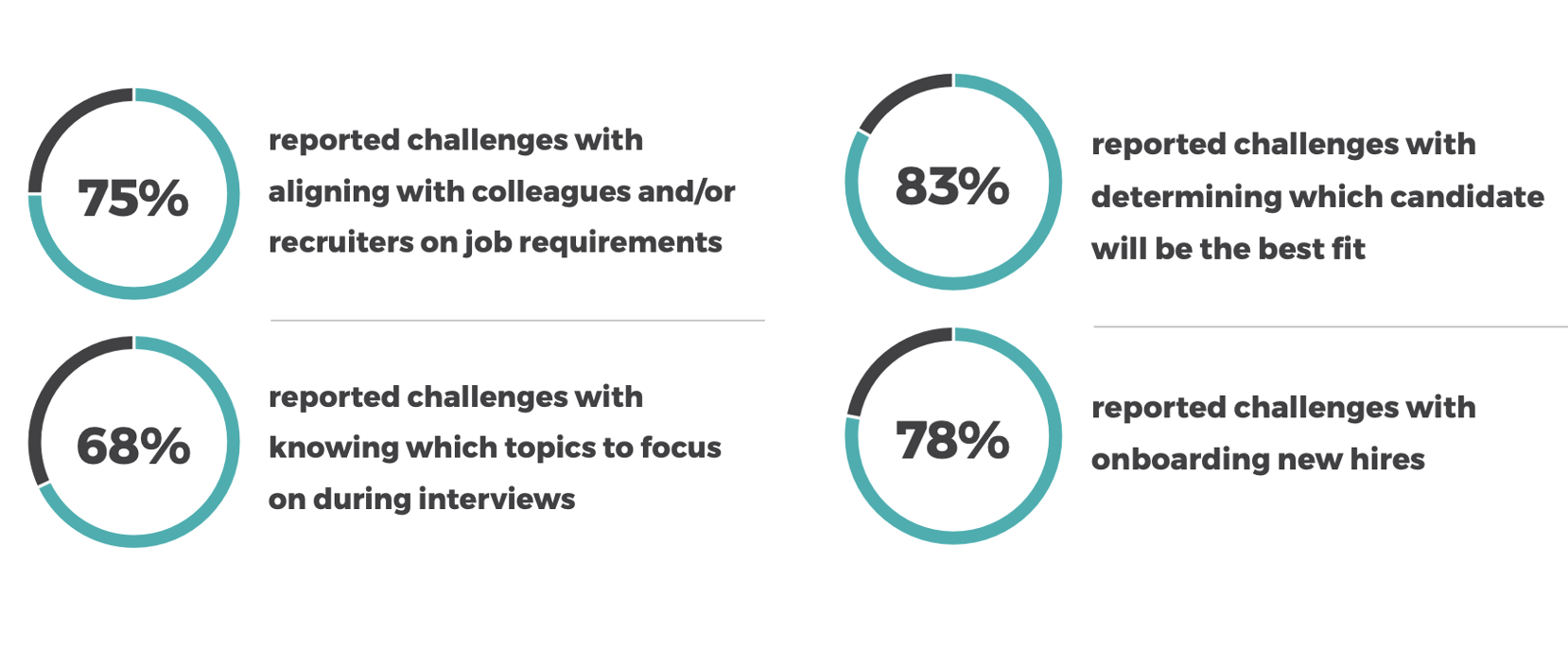
Wiley surveyed 3,000 hiring managers to understand recruiting, interviewing, selecting, and onboarding needs. The results, explored in detail in The State of Hiring whitepaper, are clear: what enables organizations to hire the best talent is a consistent, data-driven hiring process—even if that means a complete revamp.
We are thrilled to announce that Everything DiSC Workplace® in English has been granted a DNV-GL Certification!
(Some of you might be thinking, “I have no idea what that is, but it sounds like a big deal…”)
It is! The European Federation of Psychologists’ Association (EFPA) has developed a widely used standard for reviewing psychological tests—which helps organizations, practitioners, and learners make informed decisions about the quality and utility of an assessment. And the DNV-GL, an accredited body, has certified the compliance of our assessment to the EFPA’s standard. When prospective client or learner sees that Everything DiSC Workplace has been awarded the DNV-GL certification mark, they can feel confident that our assessment is a quality choice.
Lots of attempts have been made to find simple logical models that would allow people to be more effective in any collaboration. Effective relationships and behavior mean:
More adequate understanding of oneself and one’s influence on others
Being able to consciously increase one’s personal strengths
Understanding and valuing other people’s differences
Adapting one’s behavior to better meet the needs of other people and situations
DiSC deals with human behavior – the visible and more easily adaptable part of a person. The DiSC profile as an assessment tool does not deal with assessing personality or abilities but focuses on how a person perceives the world and how it affects his or her behavior and preferences.
The purpose of DiSC is not to label people. In fact, it’s the opposite – to get them out of their box and increase their behavioral amplitude. Thus, it is necessary to know oneself as well as have the ability to “read others” and respond to other people’s priorities in the right way.
DiSC is the most widely used behavioral tool in the world. Over the past 40 years, more than 50 million people have benefited from the DiSC model and training tools. DiSC partners and certified trainers form the largest network of HR experts in the whole world. DiSC partners and certified consultants form the world’s largest network of personnel experts. The most widely used areas of DiSC are teamwork, leadership, coaching, personal development, sales and recruitment.
In order to understand how DiSC methodology can benefit people, it is first necessary to understand the model itself.
It all started 90 years ago with William Moulton Marston’s theory of human behavior. Marston noticed that effective people behave according to the environment, i.e. they can anticipate the expectations or demands of the environment and choose the behavior accordingly. In his opinion, any human behavior could be described through 4 dimensions – dominance, sociality, submission, acceptance. He argued that people are a mixture of all four styles, there is no ‘best’ style – all styles have their strengths and weaknesses and they can all be more or less effective. It is important to be aware of when it is wise to use natural and consciously adapted behaviors.
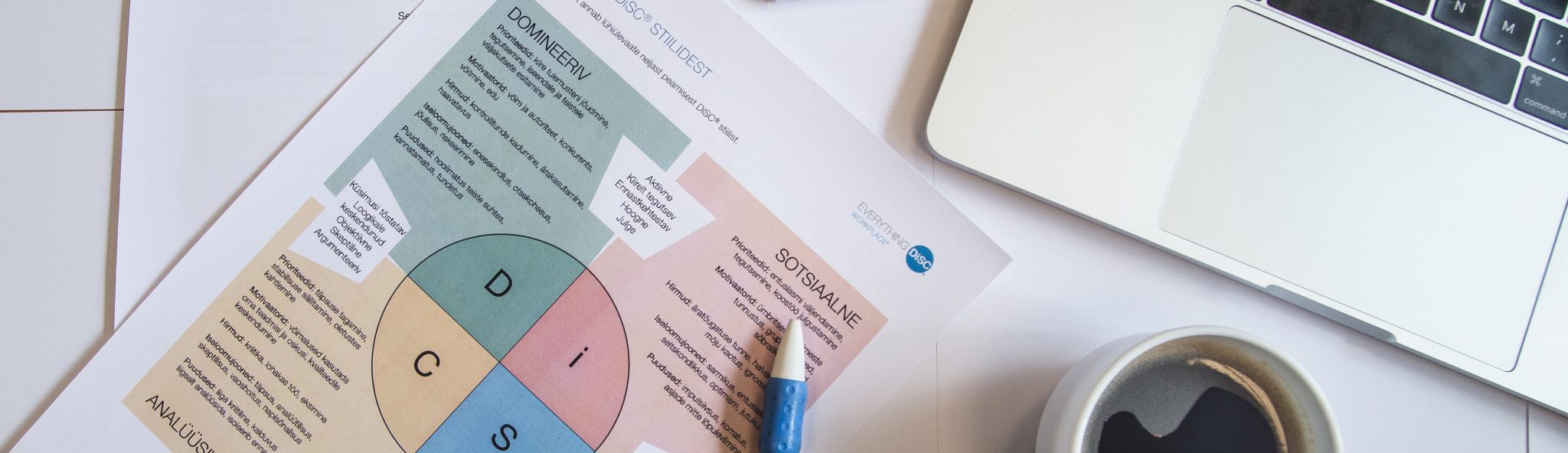
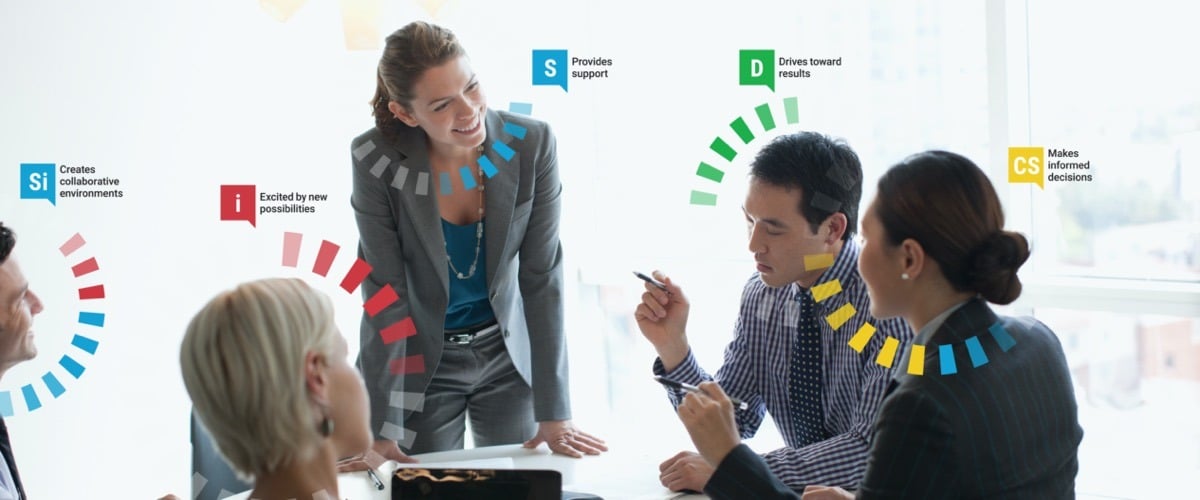
Today, the terminology of the Marston model has been updated according to the vocabulary and requirements of modern psychology. The abbreviation DiSC is formed from the initials of the English names of these four main natural behavioral dimensions – dominance, influence, steadiness, conscientiousness.
There are many varieties of the DISC assessments on the market, using somewhat different terminology as well as different types of questionnaires and profiles. The most significant success over the last 20 years has been achieved by Everything DiSC® by Wiley (previously Inscape Publishing).
So what is behind the remarkable popularity and practicality of the DiSC methodology?
– Simple but not simplistic. Each profile tells a story that the learner can easily connect with; the learner can act immediately to put the insights and strategies into practice with anyone. We keep this story simple while offering rich content that learners can understand and remember to keep the lessons from DiSC applicable in the long term.
– Reliability. Although the world around us is in constant change, some things always stay the same. One of those is human nature and psychology which has not changed much for millennia. This is also the reason for the DiSC method being timeless. Of course, DiSC tools are constantly being developed, improved and updated, which makes them relevant and easy to implement in today’s world.
– Transformational learning. We often hear that once people experience DiSC profiles, they see the world and others through a new lens. These tools have the power to transform learners’ understanding of themselves and others, offering new choices for how they interact with the people around them. This recognition is a truly eye-opening and powerful experience, but for many, it comes surprisingly late without the right tools.







 The Assessment Questionnaire
 Four Scales versus Eight
 Research and Quality Standards

 The Quiet One.
 Boredom is usually expressed through people’s behavior and comments. Some people actually are bored, and others pretend to be bored to set themselves apart from the rest of the group.
 The Arguer.
 The “Know-It-All.”
 The Glum One.